Blog

  • FERC opens emergency review of three interconnection queues

    FERC opens emergency review of three interconnection queues

    The Federal Energy Regulatory Commission issued an order on Tuesday opening an expedited review of interconnection study timelines at PJM, MISO and ERCOT, giving each operator ninety days to justify processes that now average close to four years from request to executed agreement.

    The order is unusual in its framing. Rather than proposing a rule, the Commission has asked the three operators to demonstrate that their current timelines are consistent with the obligation to provide interconnection service on terms that are not unduly discriminatory — an obligation that has been in statute since 1935 and rarely invoked against processing delay.

    Two commissioners wrote separately. The concurrence argued the review should extend to all regional operators rather than the three with the largest queues. The dissent argued that the Commission’s own 2023 reform order has not been fully implemented and that a second proceeding will divert staff from the first.

    Grid operators have consistently attributed the backlog to volume rather than process, noting that request volume has increased roughly sevenfold since 2018 while study staff has roughly doubled. That defence is factually correct and, in the Commission’s framing, beside the point.

    Comments are due in ninety days. Whatever the Commission decides, no project currently in a queue will connect sooner because of it.

  • Treasury yields slip after soft payrolls revision

    Treasury yields slip after soft payrolls revision

    The annual benchmark revision to establishment survey payrolls removed 141,000 jobs from the March-through-June period, roughly double the consensus estimate among primary dealers.

    The two-year note fell eleven basis points within the hour. The ten-year followed with less conviction, steepening the curve modestly — a move consistent with a market pricing more near-term easing without changing its view of the terminal rate.

    Revisions of this size are not unusual and are not news in themselves. What moved the curve was the composition. The downward revision concentrated in leisure, hospitality and temporary help, the three categories that have historically turned first, and it arrived alongside a household survey that had already been softer than the establishment series for three consecutive months.

    That divergence has been the central puzzle of the past two quarters. Economists who argued the household survey was closer to the truth now have a data point. Economists who argued the opposite have a smaller sample to work with.

    Fed officials have said little. The chair’s prepared remarks on Thursday were written before the release and were not amended.

  • The Grid Can’t Wait

    The Grid Can’t Wait

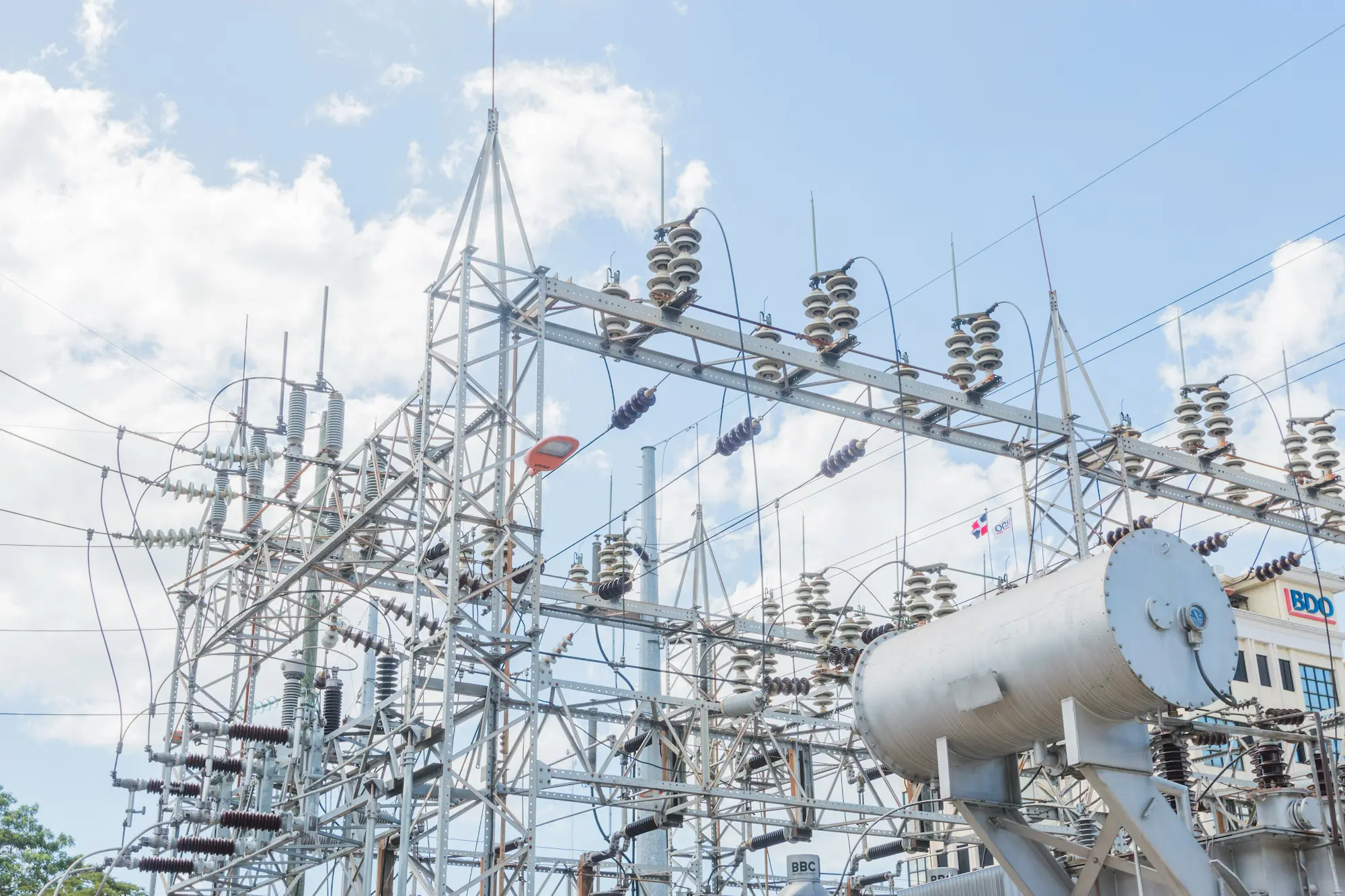
    The interconnection queue in PJM’s territory now holds more proposed generation capacity than the entire installed fleet of Germany. Almost none of it will be built this decade.

    That sentence is easy to write and hard to absorb. PJM coordinates electricity across thirteen states and the District of Columbia, a footprint that includes the densest concentration of data centres on earth. Its queue is not a waiting list in any ordinary sense. It is a filing cabinet of intentions, most of which will be abandoned before anyone pours concrete.

    What the queue actually measures

    A queue position is not a power plant. It is a request for a study — a formal ask that the grid operator model what happens to voltage, thermal limits and system stability if a given generator connects at a given point on the network. The study takes years. Most requests are withdrawn before it finishes, which means the studies must be redone, which means the next round takes longer than the last.

    Engineers call this the restudy problem. Everyone in the industry has known about it since at least 2019. The Federal Energy Regulatory Commission ordered reforms in 2023. The queues have grown every year since.

    We are not short of projects. We are short of the ability to say yes to them in a reasonable amount of time.

    The gap between requests and completions is the number that matters, and it has been widening every year since 2018. In 2016 a typical interconnection study in PJM took roughly eighteen months. The current average is closer to four years, and the projects entering the queue today are larger and more complex than the ones that entered it then.

    The county-level view

    Loudoun County, Virginia, is the clearest case. Eleven data centres there are waiting on a single substation upgrade that was first proposed in 2019. The upgrade is now scheduled for 2029. In the intervening decade the county has approved construction permits for facilities whose combined draw would exceed the peak demand of the city of Phoenix.

    None of this is secret. The permits are public, the queue is public, the substation schedule is public. What is missing is any single body whose job it is to notice that the three documents contradict each other.

    Three constraints, in order

    Transformers first. A large power transformer is a bespoke object — designed for a specific voltage, a specific site, a specific set of fault conditions — with a lead time that has stretched from eighteen months to four years. There are four factories in North America still building them at scale.

    Second, transmission right-of-way, which is a political problem wearing an engineering costume. A new interstate line crosses counties that receive none of the power and all of the towers. The approval process is designed to give those counties a voice, and it does.

    Third, and least discussed, the people. Commissioning a substation requires relay technicians and protection engineers, and the median age in both trades is above fifty. Utilities that ordered equipment in 2022 are now discovering they cannot staff the installation.

    None of these is solved by capital. All of them are solved by time, and time is the one input the AI buildout does not have.


  • Federal AI preemption bill stalls as nineteen states file suit

    Federal AI preemption bill stalls as nineteen states file suit

    The Uniform Artificial Intelligence Standards Act was written to do one thing: replace the growing patchwork of state AI statutes with a single federal floor, and void everything below it. As drafted, it would have preempted eleven state laws outright and left another nine in partial force.

    Two Republican votes moved this week. Senator Kavanagh of Arizona, who had been a co-sponsor, withdrew after her state’s attorney general joined the multistate suit. Senator Reyes of Nevada followed within a day. The bill now sits two votes short of cloture with no obvious path to finding them before the recess.

    The suit itself is the more interesting document. Nineteen state attorneys general — fourteen Democratic, five Republican — argue that the preemption clause reaches beyond the Commerce Clause because it voids state consumer-protection law in transactions that never cross state lines. That is a narrow argument, and narrow arguments are the ones that survive appellate review.

    Industry groups had treated the bill as close to inevitable as recently as March. The Chamber of Progress spent an estimated $14 million on the campaign. What changed was not lobbying pressure but the arithmetic of the map: as more states passed their own statutes, more state officials acquired something concrete to lose.

    The bill’s sponsors say they will reintroduce a narrowed version in the autumn, limited to model training disclosures. Whether the coalition that killed the broad version cares about the narrow one is the question nobody in the caucus wants to answer on the record.

  • Phoenix approved 40,000 homes. Its water plan covers 12,000.

    Phoenix approved 40,000 homes. Its water plan covers 12,000.

    Under Arizona law, a developer building in an active management area must obtain a certificate of assured water supply — a state finding that the development has access to enough water to last one hundred years. It is one of the strictest such requirements in the country, and Phoenix has issued certificates covering roughly 40,000 new homes since 2022.

    The city’s own water resources plan, published last year, models sufficient supply for approximately 12,000 of them under the drought scenario the state hydrologist now considers most likely.

    The discrepancy is not a secret and it is not a scandal. It is an artefact of two documents written for different purposes on different assumptions. The certificates rest on a groundwater model last comprehensively revised in 2019, before the Colorado River shortage declarations. The water resources plan uses post-declaration hydrology.

    What makes it consequential is that the certificates are not revocable. Once issued, they attach to the land. A developer who obtained one in 2022 and has not yet broken ground retains the right to build, and the city retains the obligation to serve.

    State legislators have introduced three bills in as many sessions that would allow retrospective review of certificates issued under superseded models. All three died in committee. The homebuilders’ association opposed each of them on the grounds that retroactive revocation would make Arizona land unfinanceable, which is true, and which is also the point.

    The practical resolution, according to two people in the city water department who were not authorised to speak publicly, is that the shortfall gets managed rather than solved: allocation cuts to agriculture, accelerated reclamation, and the purchase of tribal water rights at prices that have tripled since 2021.

  • The chip startup betting against the industry roadmap

    The chip startup betting against the industry roadmap

    Every serious foundry roadmap for the next four years converges on the same destination: 1.4 nanometre, gate-all-around transistors, high-numerical-aperture lithography, and a capital expenditure figure that only three companies on earth can absorb.

    Cadence Silicon raised $900 million in April to build on 7nm — a node TSMC classifies as mature and prices accordingly.

    The thesis is narrower than it first appears. Cadence is not arguing that smaller transistors stop mattering. It is arguing that for a specific and growing class of workload — inference at the edge, in devices with hard thermal ceilings and no fan — the binding constraint is not transistor density but memory bandwidth per watt. On that metric, the company’s engineers argue, a mature node with an aggressive on-package memory architecture beats a leading-edge node with a conventional one.

    Whether that is true is an empirical question that will be settled by silicon in about eighteen months. What is already true is that the strategy has a financial logic independent of the engineering. Mature-node capacity is available, cheap and getting cheaper as the industry’s attention moves up. A company that can design around its limits acquires a cost structure its competitors cannot match.

    The risk is well understood inside the company. If the memory-bandwidth thesis is wrong, or if the leading edge solves the same problem through packaging rather than process, Cadence has committed nine figures to a dead end. Its founders spent six years at a major foundry and describe the bet, without much hedging, as a wager that the roadmap has been optimised for the wrong customer.

  • Why grocery prices stopped falling in June

    Why grocery prices stopped falling in June

    Grocery price disinflation over the past eighteen months looked broad. It was not. Roughly three quarters of it came from a single category — eggs, dairy and the protein complex downstream of feed costs — as the avian influenza outbreak resolved and grain prices normalised from their 2022 peak.

    That category has now returned to its pre-shock trend. There is no more room in it, which means the headline number from here reflects everything else, and everything else never disinflated much to begin with.

    Packaged goods are the clearest example. Manufacturer list prices in centre-store categories have risen at an annualised 3.1 per cent through the past four quarters, barely moving from the 3.4 per cent of the year before. The relief consumers noticed came almost entirely from promotional depth — retailers absorbing margin to hold traffic — and promotional depth is a lever with a floor.

    The June print showed that floor. Food-at-home came in flat month over month, which several commentators read as a pause. The internal composition suggests something less benign: continued decline in the protein complex offset by acceleration nearly everywhere else.

    For the Federal Reserve this is awkward rather than alarming. Grocery prices are not a policy target and do not enter the preferred inflation measure with much weight. For households they are the single most legible price signal in the economy, and legibility is what shapes expectations.

  • The redistricting fight nobody is watching yet

    The redistricting fight nobody is watching yet

    There are four state supreme court elections this November that will determine the shape of eleven congressional districts, and none of them has drawn national coverage.

    The mechanism is straightforward. In each of the four states — Wisconsin, North Carolina, Ohio and Montana — the state constitution contains a clause governing districting standards, and in each the operative interpretation of that clause was set by a decision reached on a bare majority. A single seat changing hands changes the majority. A changed majority invites a new challenge to maps that were litigated to exhaustion two years ago.

    This is not a hypothetical sequence. It has already happened twice: in Wisconsin in 2023, where a new majority struck legislative maps it had previously upheld, and in North Carolina in 2022 and again in 2023, in opposite directions.

    What is unusual about this cycle is the money. Judicial races that cost under $2 million a decade ago are now clearing $30 million, and the disclosure regime governing them is substantially weaker than the one governing congressional campaigns. Roughly 60 per cent of outside spending in the 2024 Wisconsin race came through entities that do not disclose donors.

    State bar associations in three of the four states have proposed recusal rules that would require judges to step aside from cases involving major campaign donors. None has been adopted. The objection, offered candidly by one state chief justice, is that a strict rule would disqualify most of the court from most of the significant cases.

  • The Last Mile

    The Last Mile

    The Broadband Equity, Access and Deployment programme was the largest single investment in American internet infrastructure ever authorised: $42.45 billion, passed in November 2021, aimed squarely at the households that private capital had decided were not worth the trench.

    Four years on, the money has moved. The fibre has not.

    Three counties, one promise, twice

    Carter County sits in the north-east corner of Tennessee, in the folds of the Appalachians, and it has been promised universal broadband twice. The first promise came in 2015, under a state programme that paid incumbent carriers to extend existing lines. The carriers took the money and extended the lines to the edge of the profitable territory, which is where the lines already were.

    The second promise is BEAD. It is structurally different — the money flows through the state, the state runs a competitive subgrant process, and the awards carry build-out obligations with clawback provisions. On paper it fixes the failure mode of the first programme.

    Every one of these programmes is designed by people who have never had to hang a strand of fibre across a creek.

    In practice the subgrant process has taken longer than the construction it authorises. Tennessee’s initial proposal went to the National Telecommunications and Information Administration in 2023. Final approval came in 2025. Ground was broken on the first Carter County segment this spring.

    Why the delay is not incompetence

    It is tempting to read the timeline as bureaucratic failure, and some of it is. But the larger share is a design choice that nobody made explicitly. BEAD requires states to challenge and verify the federal broadband map, location by location, because the map was wrong — systematically, in the direction that favoured incumbents. Fixing it was necessary. It also consumed two years.

    The result is a programme that will probably work and will certainly arrive late. The households in Carter County that were promised service in 2015 will receive it, if the current schedule holds, in 2028.

    What the next programme should copy

    Two things, according to the state broadband directors who have now run this process twice. Verify the map before authorising the money, not after. And write the build-out obligations as milestones with dates, not as outcomes with deadlines — because a deadline that arrives when the fibre is half-strung produces a clawback fight, and a clawback fight produces no fibre at all.

  • Agents at the office door

    Agents at the office door

    Enterprise software vendors spent 2025 shipping autonomous agents — systems that take an instruction, decompose it into steps, and execute those steps against live business systems without a human in each loop.

    Their customers spent 2025 building approval queues to put the humans back.

    This is not resistance in the usual sense. The companies installing the queues are the same ones that bought the agents, often enthusiastically, and they are not trying to slow adoption. They are trying to answer a question the software does not answer for them: when an agent takes an action that turns out to be wrong, who is accountable, and what evidence exists that the action was authorised?

    In regulated industries the question has a formal answer and the answer requires a record. A pharmaceutical company cannot let a procurement agent issue a purchase order against a validated system without an audit trail that satisfies its own quality organisation. The trail is the queue.

    Vendors have begun shipping the audit infrastructure as a feature, which is the correct response and an implicit concession. The initial pitch was that agents would remove steps. The current pitch is that agents will execute steps faster while a governance layer records them — a smaller claim, and a considerably more sellable one.

    Deployment data from three large systems integrators suggests the practical ceiling on autonomy is not technical. Agents are permitted to act unsupervised in roughly the categories where a junior employee would be: reversible, bounded in cost, and unlikely to touch a regulator’s field of view.